The most tempting nursery trolley often contains plants that all flower now. That can produce a lively week and a quiet remainder of the year. Before buying, list the months in which you want interest and the conditions your border offers. Flowers, foliage and seedheads can share the work, but each plant must first be capable of growing well there.
Choose a sequence, not a collection
Begin with a few dependable perennials suited to your soil, climate and available light. Repeat them in separate groups to connect the border. Then look for a different flowering period rather than another plant with the same summer peak. Spring bulbs can emerge between later-growing clumps, while suitable late perennials extend interest after the first flush has passed.
For a temperate, reasonably sunny site, possibilities might include hardy geraniums, catmint, salvias and autumn-flowering asters. These names describe broad groups, not interchangeable plants. A moisture-loving geranium and a drought-tolerant one belong in different situations. Check the exact species or cultivar, its hardiness and its mature dimensions.
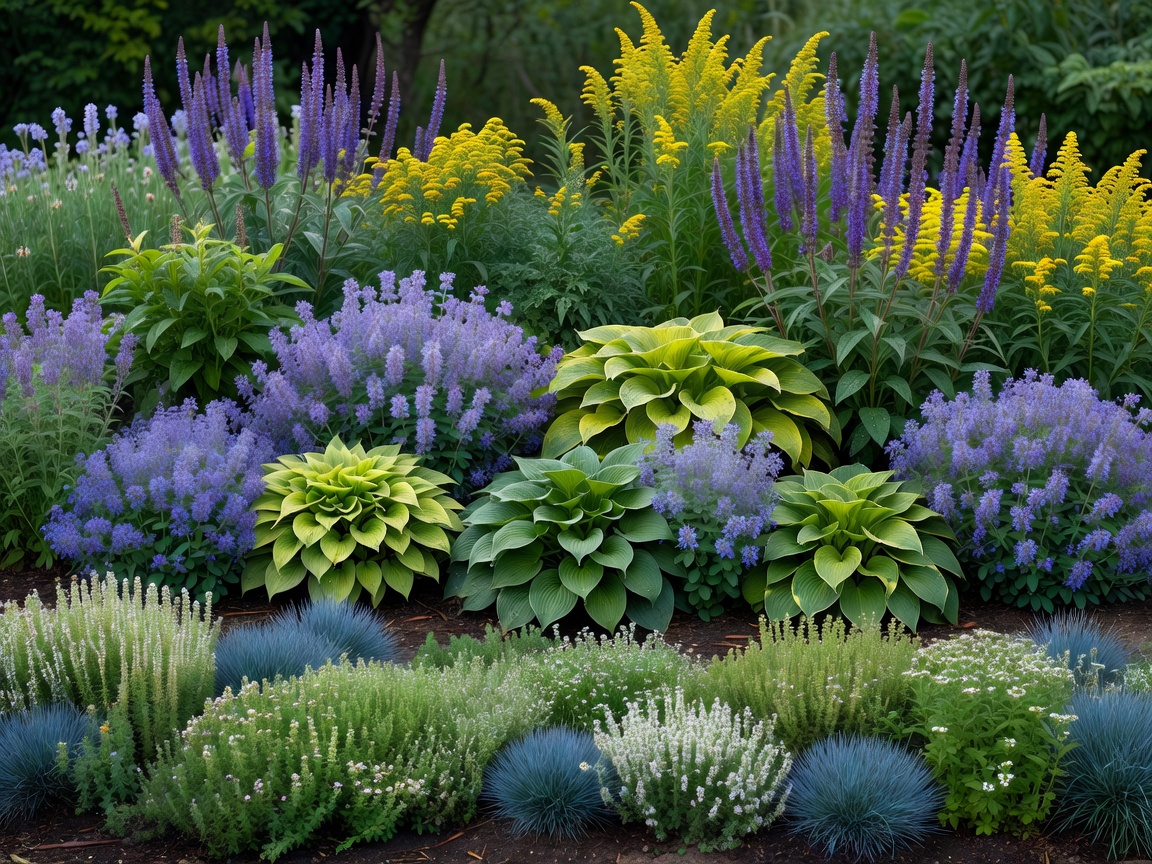
Use mature spread as your starting point
A small pot tells you very little about the space its plant will occupy. Use reliable mature spread information to estimate planting positions, then adjust for the plant’s habit and local conditions. Do not crowd everything together simply to hide soil in the first year. Short-lived fillers or a suitable organic mulch can cover gaps without sacrificing future airflow.
Keep crowns at the appropriate planting depth and water thoroughly after planting. Avoid burying stems under mulch. On heavy ground, improving overall structure and drainage matters more than filling individual holes with rich compost. Choose plants adapted to the site instead of expecting a planting-hole amendment to change the whole border.
Sketch the flowering months
This table is an illustrative planning aid for a temperate Northern Hemisphere garden, not a guaranteed calendar. Weather, latitude, cultivar and pruning alter flowering. Southern Hemisphere gardeners should use local seasonal information rather than simply treating these dates as universal.
| Plant example | Typical window | Planning note |
|---|---|---|
| Pulmonaria | March–May | Often useful in partial shade with suitable moisture. |
| Nepeta × faassenii | May–September | Sunny, well-drained conditions; spread can soften a path edge. |
| Salvia nemorosa | June–September | Repeat flowering varies with cultivar, weather and care. |
| Echinacea purpurea | July–September | Check drainage and local winter performance. |
| Hylotelephium cultivars | August–October | Late flowers and persistent seedheads; avoid overly rich soil. |
Make your own version with plants already in the garden. A blank spring column or a crowded midsummer column becomes easy to spot. Keep notes for more than one season: a newly planted perennial may not represent its mature flowering performance.
Plan for different visitors
Accessible, open flowers are often a sensible choice for nectar and pollen, but a single flower shape will not serve every visitor. Include a variety of forms and flowering periods. Add regionally native species where appropriate, and check local invasive-plant guidance before introducing vigorous ornamentals.
Observe before making claims about wildlife value. Bees visiting one catmint clump do not tell you whether caterpillars have food plants or whether nesting habitat exists. Small areas of undisturbed stems, safe patches of bare ground and appropriate host plants may matter alongside flowers. Keep any shallow water dish clean and provide safe landing places.
Avoid routine broad-spectrum pesticide use. If damage appears, identify its cause and consider whether it needs intervention at all. Where treatment is necessary, follow local regulations and product instructions, including restrictions around flowering plants and beneficial insects.
Edit with a light but regular hand
Remove unwanted seedlings while they are small, but learn what your chosen plants look like as seedlings first. Divide congested clumps when appropriate for the species and conditions. Deadheading can extend some displays; leaving selected seedheads supports winter structure and may provide food. Neither practice needs to apply to the entire border.
Record one successful combination and one gap each season. That is enough to guide a useful change without redesigning everything. If the border becomes difficult to maintain, reduce the number of demanding plants before increasing your workload.
Useful plant references
Check plant details with the Royal Horticultural Society and regional advice. The Xerces Society provides pollinator resources, particularly for North America; Bumblebee Conservation Trust offers UK-focused guidance.