Vertical planting is useful in a small cottage garden, but “grows upward” does not mean “needs no ground space.” Climbers need soil, water, light and access for pruning. Their top growth also becomes heavier in wind and rain. A modest plant on a sound framework is often more successful than a vigorous specimen repeatedly cut back to fit.
Know how the plant holds on
Climbers use different methods, and the distinction matters. Clematis climbs using leaf stalks that curl around suitably slender supports. Many honeysuckles twine their stems. A climbing rose does not attach itself securely to a smooth arch; it needs its main stems tied and trained. Self-clinging plants use roots or adhesive structures and require particular care around building surfaces.
Identify the exact plant before choosing a framework. Common names can hide major differences in vigour, flowering and regional behaviour. Some honeysuckles are invasive outside their native ranges. Check local guidance and prefer a suitable non-invasive alternative where necessary. Do not rely on a seller’s photograph to establish mature size.
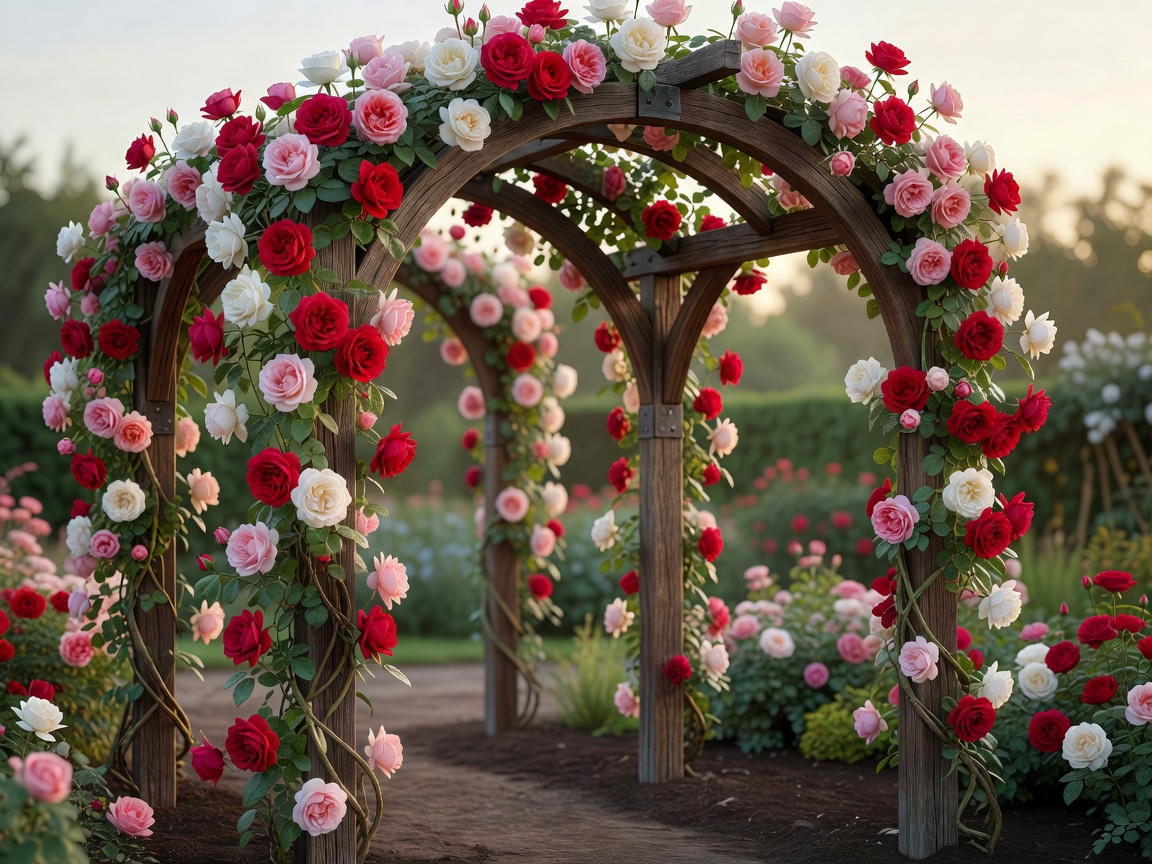
Match support to the job
Install the framework before planting where possible. It is easier to set posts, check alignment and work around services without damaging roots. Use materials suitable for outdoor exposure, and obtain qualified help where a structure could fall onto a path, a neighbour’s property or a building.
| Support | Useful role | Check before choosing |
|---|---|---|
| Freestanding arch | Marks a threshold or frames a view. | Anchoring, headroom, side clearance and wind exposure. |
| Wall wires | Train tied stems across a vertical surface. | Wall condition, suitable fixings and room for airflow. |
| Trellis panel | Provides a climbing network and light screening. | Strength, mesh size and ability to replace the panel. |
| Obelisk | Adds height within a bed or large container. | Stability, plant vigour and access around its base. |
Thin decorative trellis may suit a light seasonal climber but not a mature woody plant. Likewise, a vigorous wisteria needs substantial, properly designed support and ongoing pruning; it is not a simple substitute for a compact clematis. If you cannot maintain the eventual plant safely, choose something smaller.
Leave room at the roots
Soil beside a wall can be unusually dry because of rain shadow and competing foundations or plants. Prepare a suitable planting area rather than squeezing roots into a narrow rubble-filled gap. Position and depth depend on the species and site, so follow reliable plant-specific instructions rather than a universal rule for all climbers.
Water thoroughly during establishment when conditions require it. Mulch suitable soil while keeping material away from stems. A container-grown climber needs a sufficiently large, stable container, drainage and much closer watering attention than an established plant in open ground. Its roots are also more exposed to temperature extremes.
Guide young stems early with soft ties that allow expansion. Check ties regularly so they do not cut into growth. Where appropriate, spreading main rose stems more horizontally can encourage flowering shoots along them. Keep thorny stems clear of faces, sleeves and the full usable width of a path.
Prune for the plant, not the calendar alone
Different clematis groups flower on different ages of growth. Identify the group before cutting everything to the same height. Roses, honeysuckles and other climbers also have different pruning needs. If identification is uncertain, observe flowering and consult a reliable reference before making a drastic cut.
Inspect supports after severe weather and when the plant is leafless enough to reveal its framework. Check corrosion, rotting timber, loose fixings and trapped ties. Do not climb a decorative arch to prune it. Work from an appropriate stable position, and use a competent professional when safe access is beyond your equipment or ability.
In a small garden, one well-trained climber can be enough to connect the ground-level planting with the space above. Keep its base visible enough to inspect, preserve the path below and include its care in your seasonal routine.
Further guidance
Consult the Royal Horticultural Society’s climber guidance and the International Clematis Society for plant-specific information. Building fixings and structural loads need site-specific expertise, not a planting article.